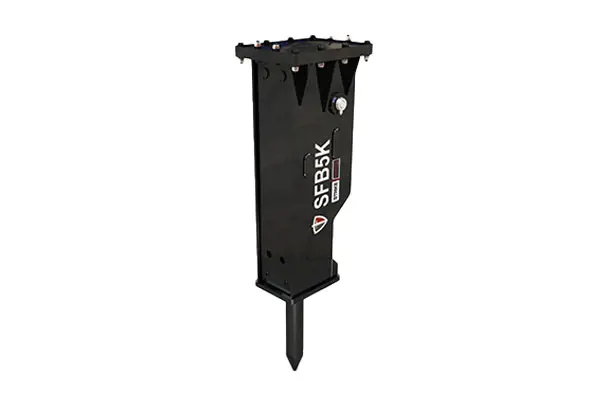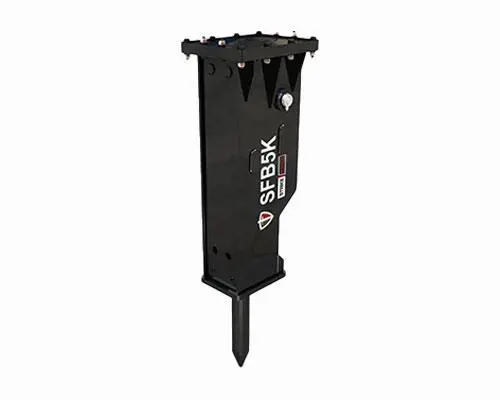







This is not the best breaker | Strike Force SFB750
Quick Summary
The Bradco Strike Force SFB750 hydraulic breaker isn’t the most premium breaker on the market—but that’s exactly why it stands out. It delivers solid construction, dependable performance, and strong value without the cost or complexity of top-tier models. For operators who need a reliable breaker without stepping into rental-only pricing, it hits a practical sweet spot.
What Does a Hydraulic Breaker Do?
Hydraulic breakers are built for tasks that require concentrated impact force. They are commonly used to break concrete, split rock, trench through hard ground, and handle demolition work that would otherwise require heavy manual labor.
While concrete and rock breaking are the most common applications, interchangeable tool tips expand their usefulness. Dished tips can be used for driving posts (with caution), while flat plates are sometimes used for compacting soil in trenches.
How Hydraulic Breakers Work
Inside a hydraulic breaker, a hammer point cycles rapidly within a sealed housing. A nitrogen charge acts as a shock absorber, storing and releasing energy with each strike. Over time, nitrogen can slowly leak, reducing performance until it is recharged.
Higher-end breakers replace this simpler system with advanced accumulators and heavier internal components. These designs reduce maintenance but come with significantly higher upfront costs.
Why the Bradco Strike Force Is Different
The Bradco Strike Force series sits firmly in the “better” category of hydraulic breakers. It’s not the most advanced breaker available, but it delivers reliable performance and durability without the premium price tag.
Manufactured in South Korea, the Strike Force stands apart from low-quality imports. Thicker housings, higher-grade steel, and robust mounting hardware allow it to survive tough trench work and repeated impacts against stone or concrete.
Mounting and Machine Compatibility
The Strike Force breaker is compatible with both skid steers and excavators. It is available with standard skid steer mounts as well as Kubota-specific options, depending on your machine.
The mounting plate is built from heavy steel and includes thoughtful features like integrated steps, making it easier and safer to enter and exit the machine during operation.
Included Parts and Long-Term Support
Each Bradco breaker ships with valuable extras that support long-term ownership. This includes a second working point—a roughly 40-pound tool valued around $400—and an additional seal kit.
Seal maintenance is inevitable with breakers, but having replacement parts on hand means less downtime and fewer surprises as the tool ages.
Operating Tips to Extend Breaker Life
Proper operation has a huge impact on breaker longevity. High-flow hydraulics are usually unnecessary; standard flow provides more than enough power when paired with correct pressure and positioning.
One of the most common mistakes is prying with the breaker. Side-loading the tool can destroy internal seals and lead to premature failure. Always apply force straight down and avoid twisting or levering against material.
Safety is equally important. Breakers can eject chips and debris when working in hard materials, making a demolition door an essential addition for operator protection.
Is Owning a Hydraulic Breaker Worth It?
Hydraulic breakers were once considered rental-only tools due to their cost. Models like the Bradco Strike Force change that equation by making ownership practical for contractors, landowners, and municipalities with occasional breaking needs.
With strong parts support, professional-grade construction, and reasonable pricing, the Strike Force is a solid long-term investment for those who need dependable performance without paying for top-tier features they may never use.
Frequently Asked Questions
Is the Bradco Strike Force the best hydraulic breaker available?
No. There are more advanced and expensive breakers on the market. The Strike Force stands out because it offers strong performance and durability without the premium cost.
Do I need high-flow hydraulics to run this breaker?
No. Standard-flow hydraulics are sufficient for most applications. Proper pressure and correct operating technique matter more than raw hydraulic flow.
What maintenance does a hydraulic breaker require?
Over time, seals and nitrogen charges may need service. Regular inspection and correct operation greatly extend service life.
Is owning a breaker better than renting?
If you have recurring or unpredictable breaking work, ownership can be more convenient and cost-effective. For occasional use, models like the Strike Force make ownership realistic.