






Kubota BX1500, BX1830, BX2230, BX23 Coolant Change and Flush
BX1500 / BX1830 / BX2230 / BX23 Owner Service Guide
Flush the cooling system and change the coolant every 2 years. Old coolant loses its corrosion protection, and the inside of the radiator and engine water jacket corrodes and scales. Check the coolant level in the recovery tank daily and keep the radiator screen clean between changes.
| Interval | Every 2 years |
|---|---|
| Time | 1 hour, plus cooling time |
| Tools | Drain pan, funnel, cooling system cleaner |
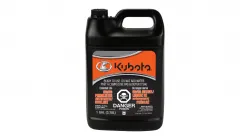
| Parts | Permanent-type antifreeze and clean, soft water, or premixed coolant |
Capacity and coolant specification
| Model | Coolant capacity, with recovery tank |
|---|---|
| BX1500 | 2.9 L (3.1 U.S. qt.) |
| BX1830 | 2.9 L (3.1 U.S. qt.) |
| BX2230 | 3.1 L (3.2 U.S. qt.) |
| BX23 | 3.5 L (3.7 U.S. qt.) |
Use permanent-type (PT) antifreeze mixed with clean, fresh, soft water. The antifreeze ratio must not exceed 50 percent. Follow the antifreeze maker's mixing chart for your lowest expected temperature.
| Antifreeze by volume | Freezing point | Boiling point at atmospheric pressure |
|---|---|---|
| 40% | −24 °C (−12 °F) | 106 °C (222 °F) |
| 50% | −37 °C (−34 °F) | 108 °C (226 °F) |
The radiator pressure cap raises the boiling point above the figures in the table.
Draining and flushing
- Park on level ground, set the parking brake, stop the engine, remove the key and let the engine cool completely.
- Open the hood. Place a drain pan under the radiator drain.
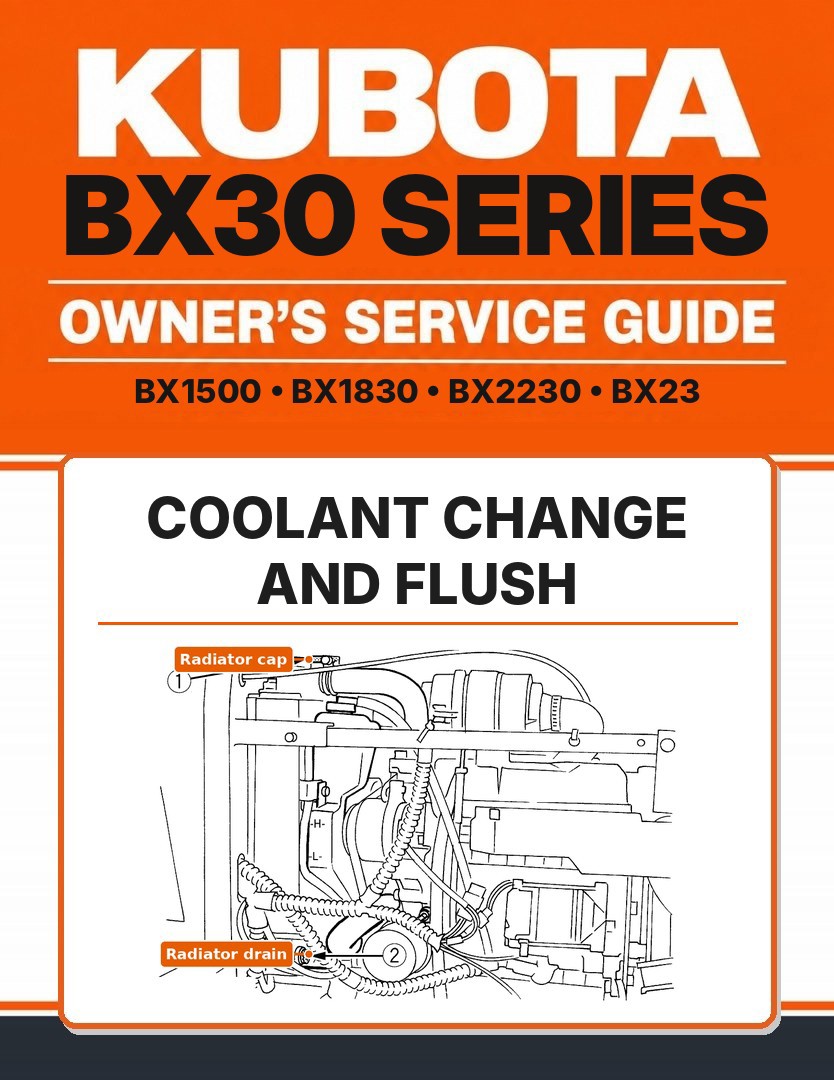
- Remove the radiator cap. The cap must be off for the coolant to drain completely.
- Open the radiator drain and let the coolant drain.
- Close the radiator drain.
- Fill the system with clean water and cooling system cleaner, and run it according to the cleaner's directions.
- Drain the cleaning solution the same way.
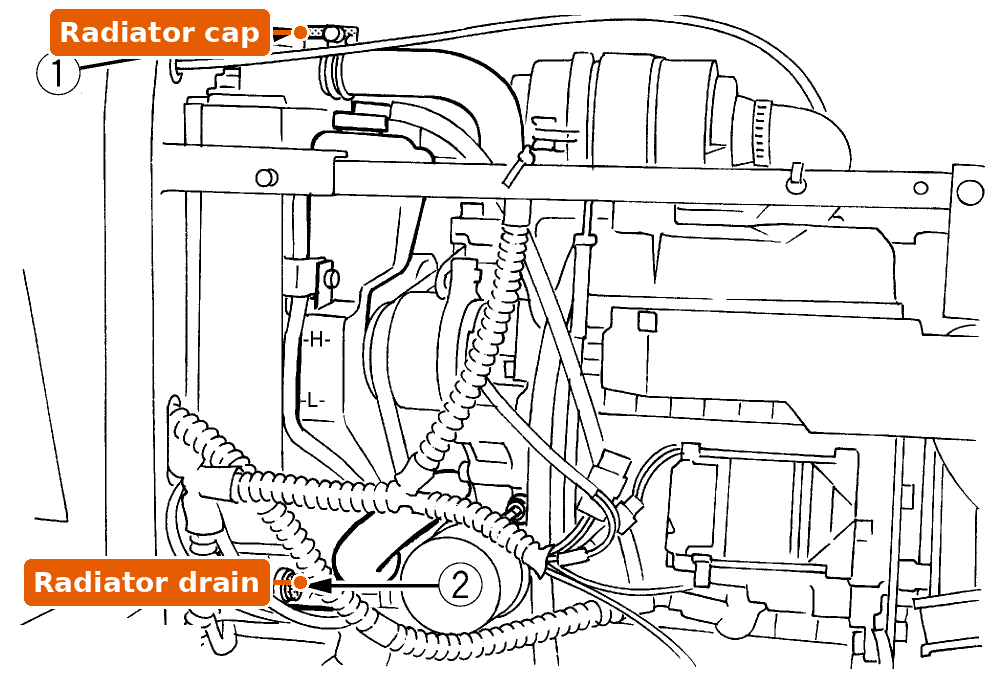
Do not use radiator cleaning agents in a system that already contains antifreeze. The corrosion inhibitors in antifreeze react with the cleaner and form sludge. Drain and rinse with plain water first.
Before adding antifreeze for the first time, clean the inside of the radiator by filling it with fresh water and draining it a few times.
Refilling
- Close the drain. Fill the radiator with the antifreeze and water mixture until the level is just below the radiator cap opening.
- Install the radiator cap securely. A loose or poorly seated cap lets coolant escape and the engine can overheat.
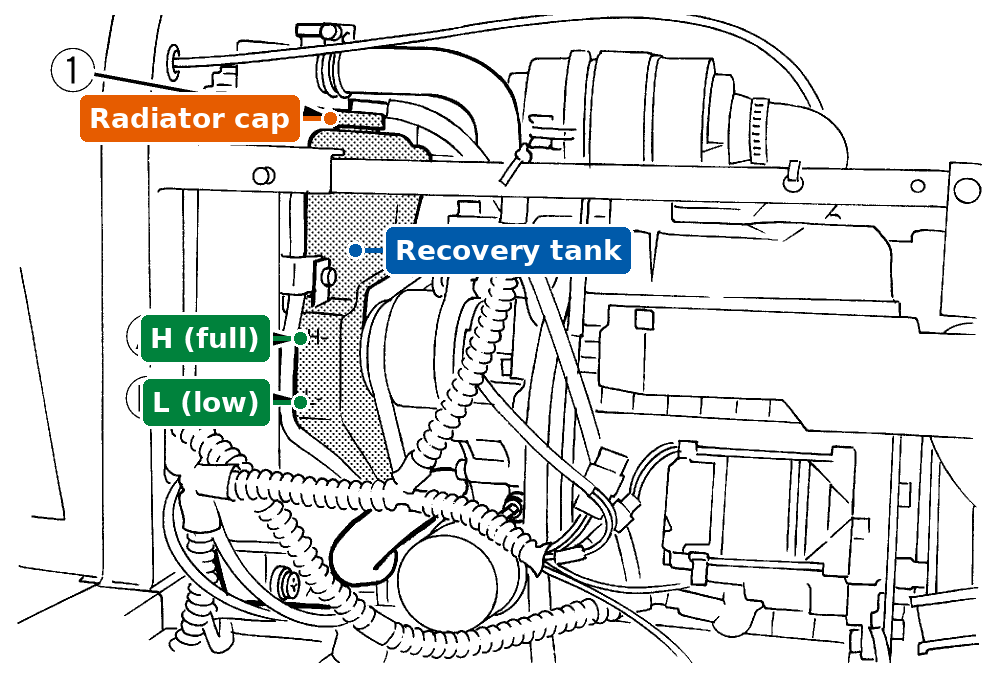
- Fill the recovery tank to the H mark.
- Start the engine and run it for a few minutes.
- Stop the engine, remove the key and let it cool.
- Check the level in the recovery tank and add coolant if needed.
Do not start the engine without coolant. Take the old coolant to a recycling center; it is toxic to people and animals.
To check the condition of your coolant, see our video:
Daily coolant level check
Check the coolant level in the recovery tank before starting the engine each day. The level must be between the H and L marks. If the level has dropped from evaporation, add water only. If coolant has leaked out, add the antifreeze and water mixture up to the H mark, and find and repair the leak.
Panel and radiator screen
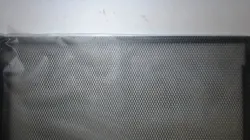
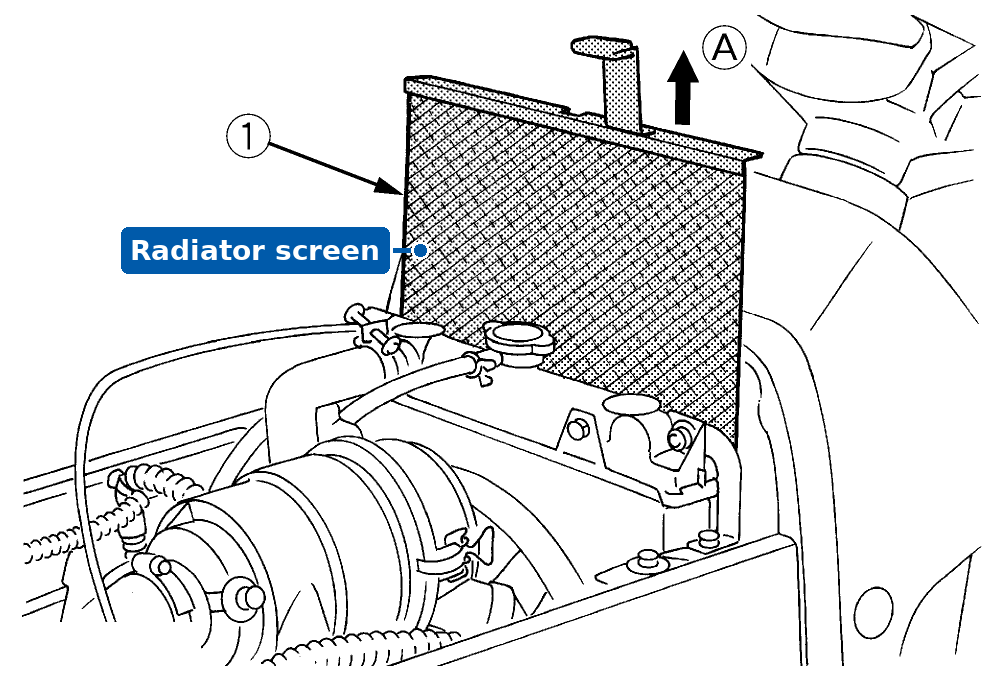
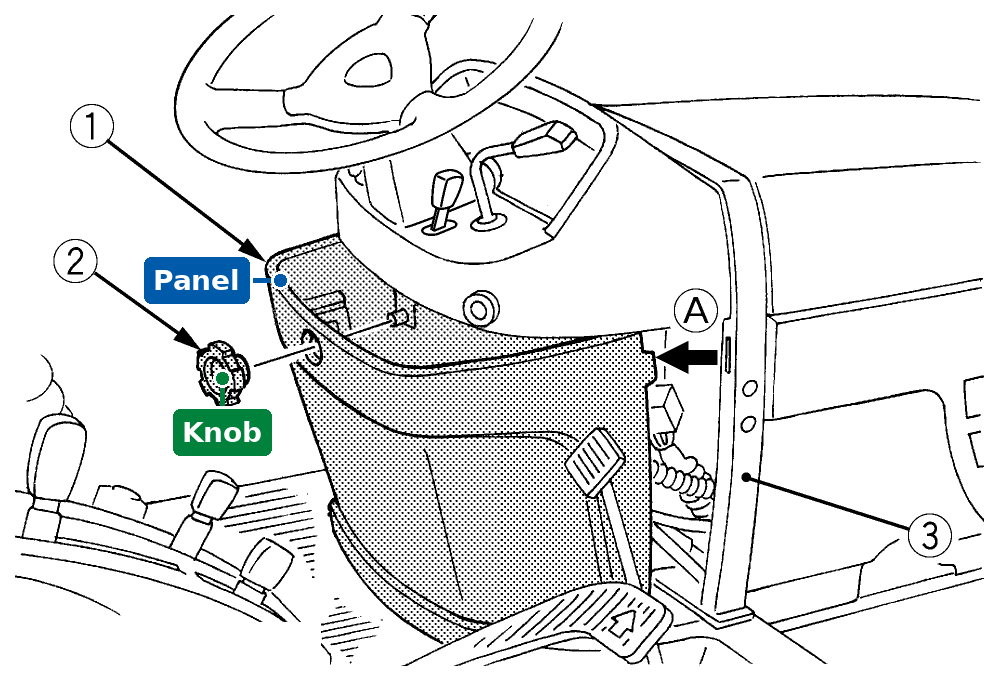
The radiator screen keeps grass and chaff out of the radiator fins, and the panel screen covers the battery compartment. Check both before each day of use and clean them whenever debris builds up. A plugged screen causes overheating and starves the air cleaner of air.
- Stop the engine and remove the key.
- Pull the radiator screen straight up out of its guides and clean off all debris.
- Remove the knob and take off the panel. Clean out any dust or chaff in the battery compartment.
- Reinstall the screen. Reinstall the panel fully on the center pillar so dust cannot get in.
If the engine overheats
- Stop work in a safe place and let the engine idle with no load. Do not shut it off suddenly.
- After about 5 minutes of idling, stop the engine.
- Stay away from the tractor for at least 10 more minutes, or as long as steam is coming out.
- When it is safe, find and correct the cause before starting the engine again. Common causes are low coolant, a plugged radiator screen or fins, a loose or broken fan belt, a leaking hose, or a defective radiator cap.
Parts
| Part | Part number | Notes |
|---|---|---|
| Coolant, 50/50 premix, 1 gallon | 77700-06325 | |
| Radiator cap | 16851-72420 | |
| Radiator drain cock | K2561-85250 | |
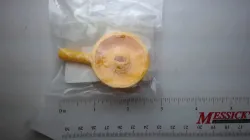
| Radiator screen, BX1500 and BX1830 | K2521-85414 | |
| Radiator screen, BX2230 and BX23 | K2561-85414 |
Related
- Hose and line inspection
- Fan belt adjustment
- Air cleaner element
- BX1500 / BX1830 / BX2230 / BX23 Owner Service Guide
To have the cooling system serviced at Messick's, schedule service.